

Close


Interested in an amazing adventure?
Book Your Journey
Interested in an amazing adventure?
Book Your Journey
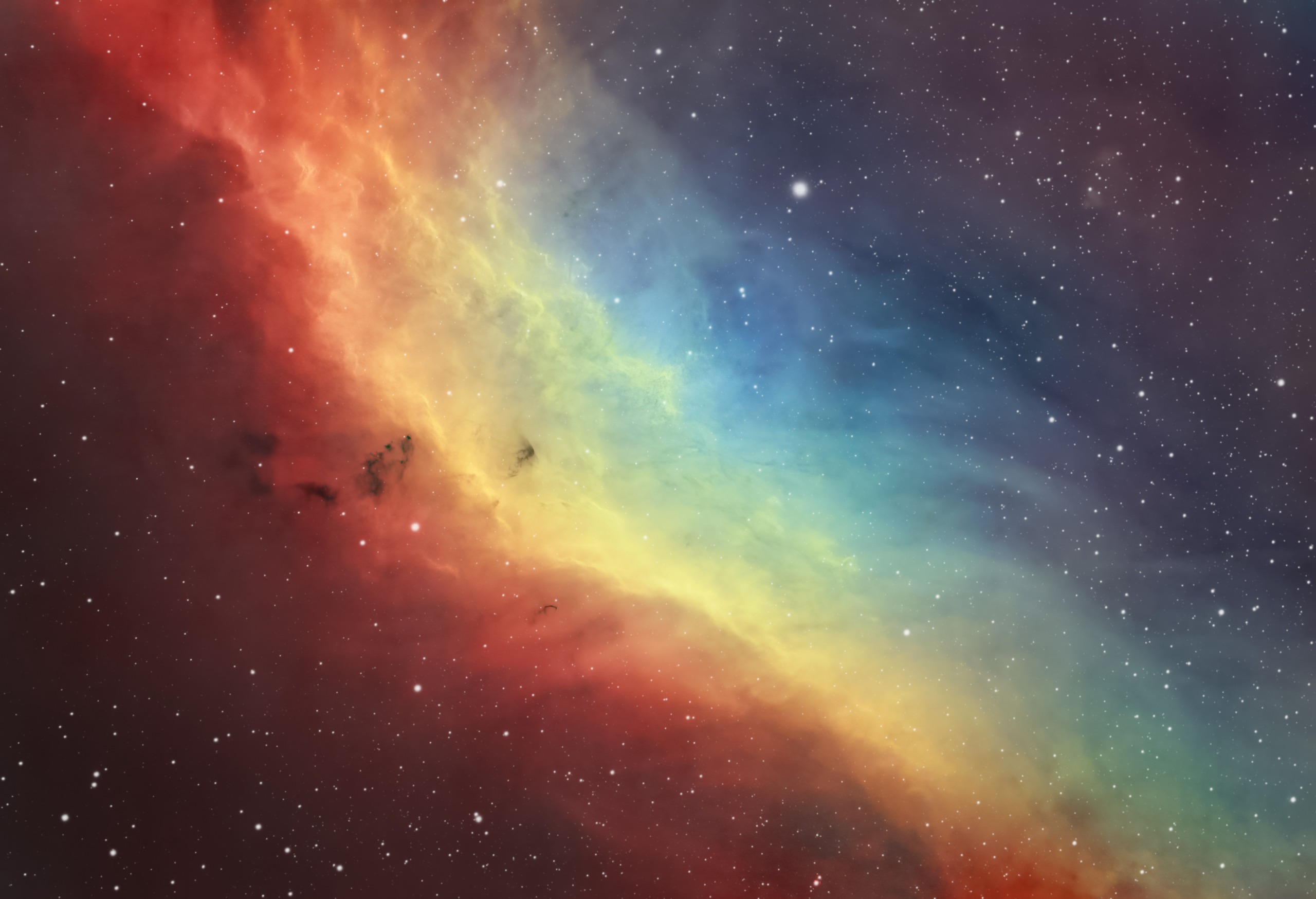
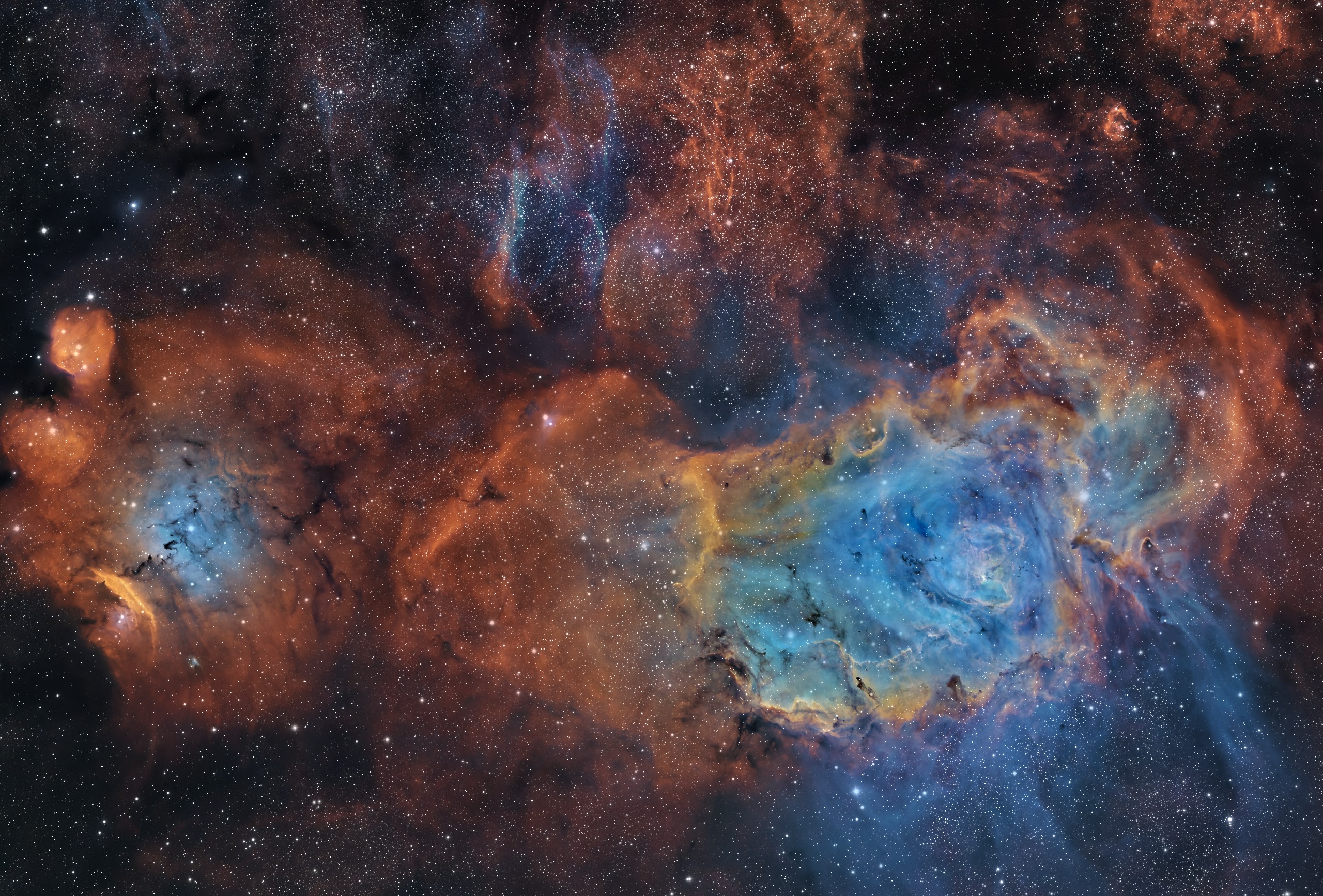
The California Nebula (NGC 1499) is an extended emission nebula located in the constellation
Perseus, spanning a vast region of ionized hydrogen energized by nearby hot stars. Despite its
size, it remains visually faint, revealing its true structure only through long-exposure imaging.
This observation uncovers the nebula’s internal complexity, where large-scale gas distributions
are shaped by radiation, turbulence, and stellar winds. Subtle variations in density and
ionization create layered structures, while embedded dark regions suggest areas of compressed
material and evolving dynamics within the cloud.
Beyond visual representation, this dataset allows for deeper analysis of the nebula’s physical
behavior. Cross-sectional profiling of the image reveals measurable variations in color and
brightness, corresponding to changes in emission strength across hydrogen-alpha (Hα), sulfur
(SII), and doubly ionized oxygen (OIII) channels.
These variations trace the underlying conditions of the gas, including temperature, density, and
ionization state, offering insight into the processes governing large-scale nebular formation and
evolution.
Rather than a static cloud, the California Nebula emerges here as a dynamic system, where
radiation and matter continuously interact to shape its structure over time.
Total Integration Time: 36 Hours
Captured from Al Sadeem Observatory by Al Sadeem Astronomy
✓ Success