



Close


Interested in an amazing adventure?
Book Your Journey

Interested in an amazing adventure?
Book Your Journey
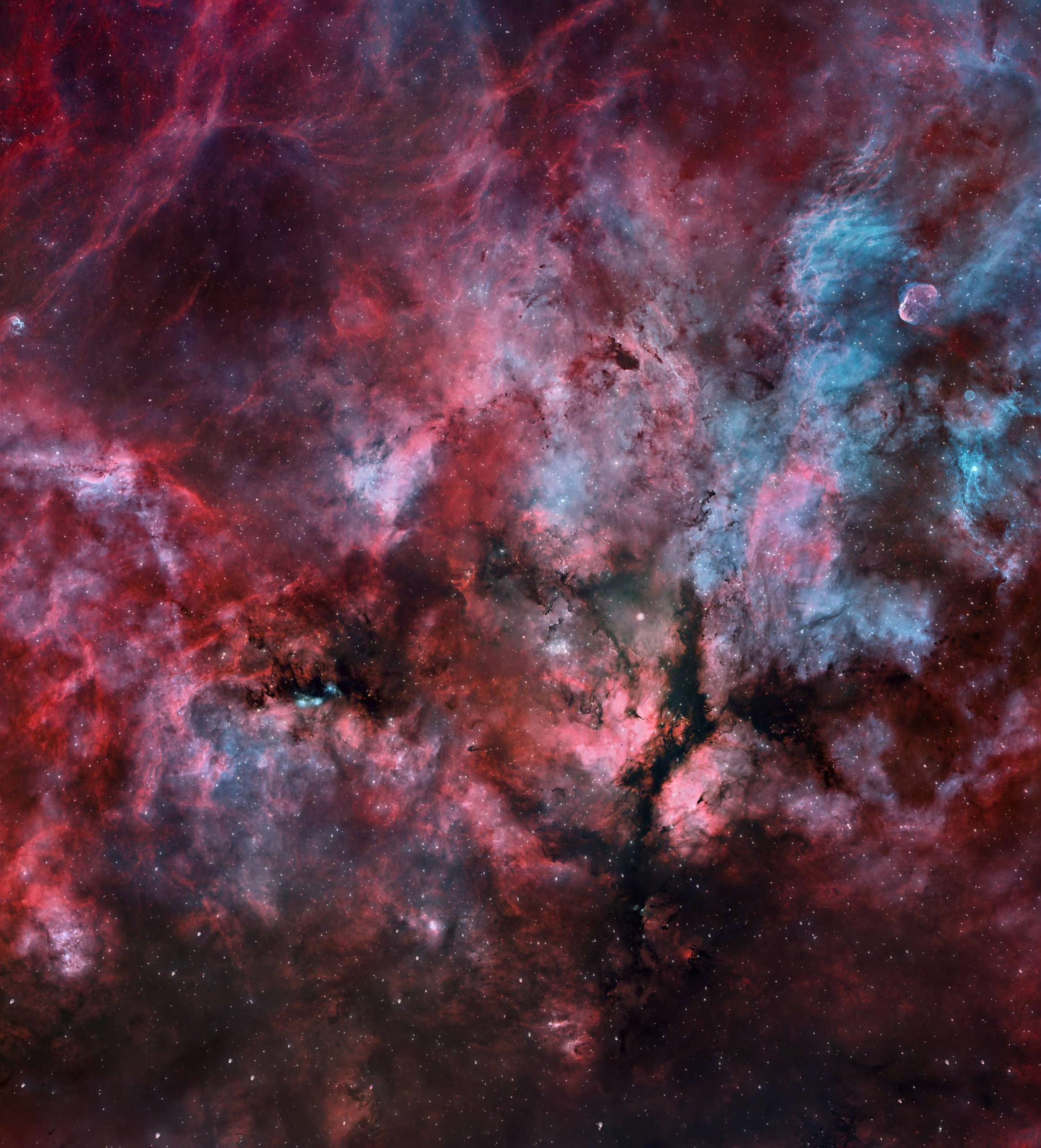
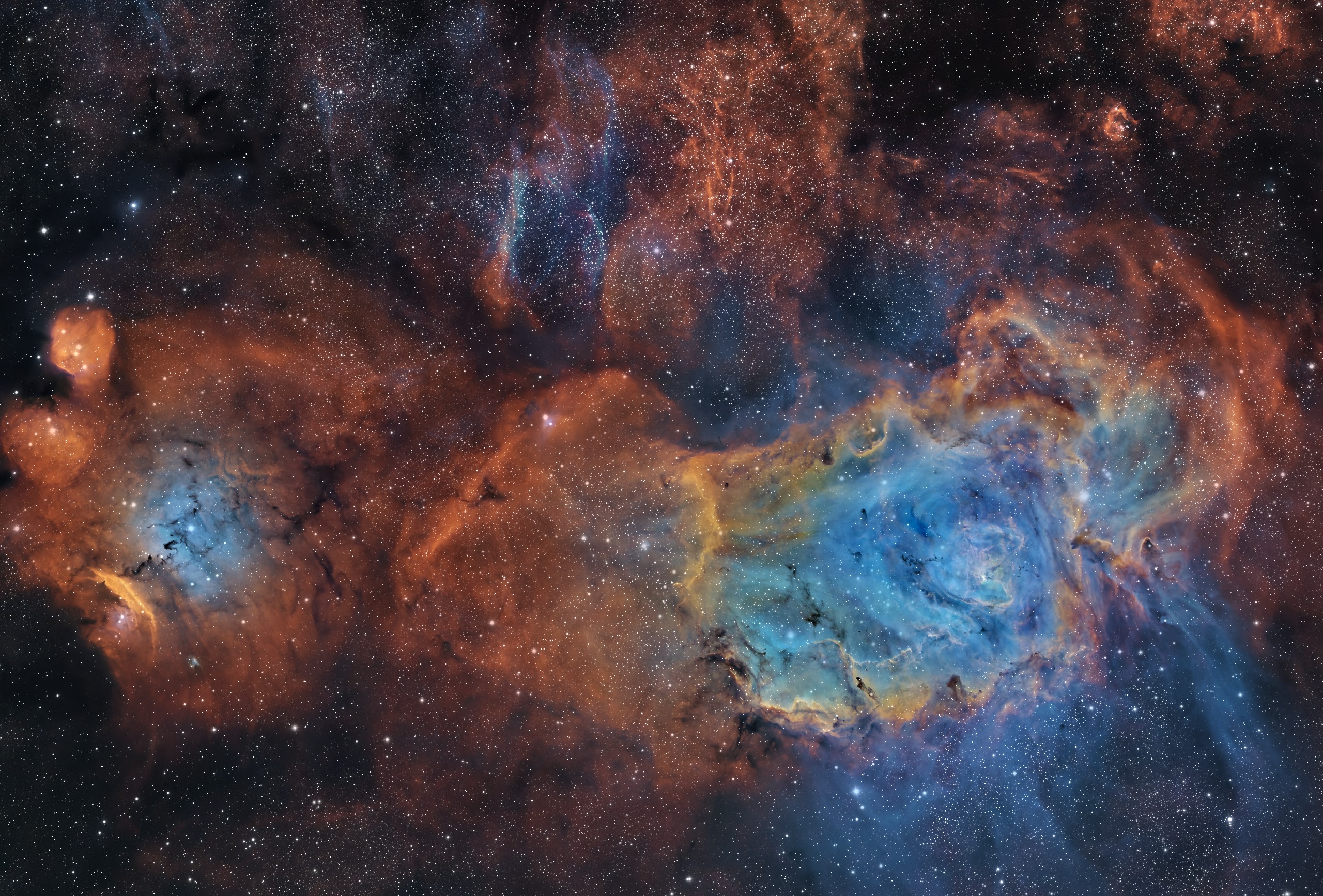
The Cygnus region is one of the most structurally rich areas of the Milky Way, containing
overlapping layers of ionized gas, dark dust, and active star-forming ﻣﻧﺎطق. In broadband
imaging, much of this complexity appears blended. Through tri-band filtration, however, the
nebula separates into distinct physical layers.
This observation utilizes narrowband isolation of hydrogen-alpha (Hα), doubly ionized oxygen
(OIII), and sulfur (SII), allowing each emission channel to reveal a different component of the
interstellar medium.
Hydrogen traces the dominant structure of the nebula, outlining the large-scale distribution of
ionized gas. Oxygen highlights regions of higher energy excitation, often associated with shock
fronts and intense radiation fields. Sulfur, typically fainter, exposes denser and more evolved
where material has been further processed.
The combination of these channels does more than produce color contrast. It introduces a form
of visual depth, where structures that overlap in space become distinguishable in composition
and physical state. Filaments, cavities, and shock boundaries emerge with greater clarity,
revealing the layered architecture of the region.
Rather than a flat field of emission, the Cygnus complex appears here as a multi-dimensional
environment, where different stages of stellar influence coexist and interact across vast scales.
Total Integration Time: 56 Hours
Captured from Al Sadeem Observatory by Al Sadeem Astronomy
✓ Success